
Interview with Dr Leon Chetcuti; CEO, MDA
When the Malta Developers’ Association changed its name to the Malta Development Association, it was a small adjustment with a larger meaning. The organisation was signalling that its interests extended beyond the act of building to include economic, social and environmental implications of development.Dr Leon Chetcuti has been in post as Chief Executive Officer for two years now, and the work has been about giving that revised name factual substance.
We met at the MDA’s new offices in Mriehel’s Central Business District, a move the association also made to have more space for meeting members and hosting events. The new setting is one obvious change.But after two years, it is worth asking what else has shifted and what has remained constant at the organisation’s core.

Chetcuti came to the role from the MDA’s council, didn’t. “The MDA was doing a lot of work,” he says. “But it wasn’t always getting through to members. People would ask what we were doing about a particular issue. They didn’t know. Not because they weren’t paying attention, but because we weren’t telling them clearly enough.”
A quarterly newsletter now summarises meetings and positions. A WhatsApp group gives members a place to receive updates and offer feedback. “It’s not perfect yet,” he acknowledges. “We still have members who tell me they didn’t know about something. It means we need to keep working on how we deliver the message.”
The MDA has also stepped up its public-facing work, with a more active presence on social media and regular television programmes. For members, this means their industry is being represented accurately.
STRONGER POSITIONS, BETTER ANALYSIS
Having a chief executive has allowed the MDA to go into more detail on policy questions than was possible before.
“When new laws are proposed, we can now examine them thoroughly, conduct proper analysis, and then issue a position that’s been thought through,” Chetcuti explains. “The discussions we have with policymakers are more useful because we’ve done the work beforehand. That means better outcomes for our members.”
The association continues to track promise of sale agreements closely. In April 2024, the MDA reported a 14% surge in the value of properties promised to be sold compared to the same month the previous year, with figures climbing from €363 million to €415 million. Members receive this data directly, giving them market intelligence they would struggle to obtain elsewhere. The television programmes have also evolved. “We choose guests who are relevant to current issues,” Chetcuti says”Our members want to see their association leading the conversation.”
“The discussions we have with policymakers are more useful because we’ve done the work beforehand”
THE COUNCIL AND THE ROLE OF THE CEO
Some things have not changed, and Chetcuti is clear that they should not. The council remains the decision-making body. President Michael Stivala continues to lead it. The core mission – representing the development industry and its members – is what it has always been.
Chetcuti attends council meetings, contributes to discussions, and carries out what has been agreed. “I don’t vote,” he explains. “My job is to advise and then to implement the Board’s decisions.” The relationship with Stivala has been productive. Together, they have worked on bringing the MDA into closer collaboration with other organisations.
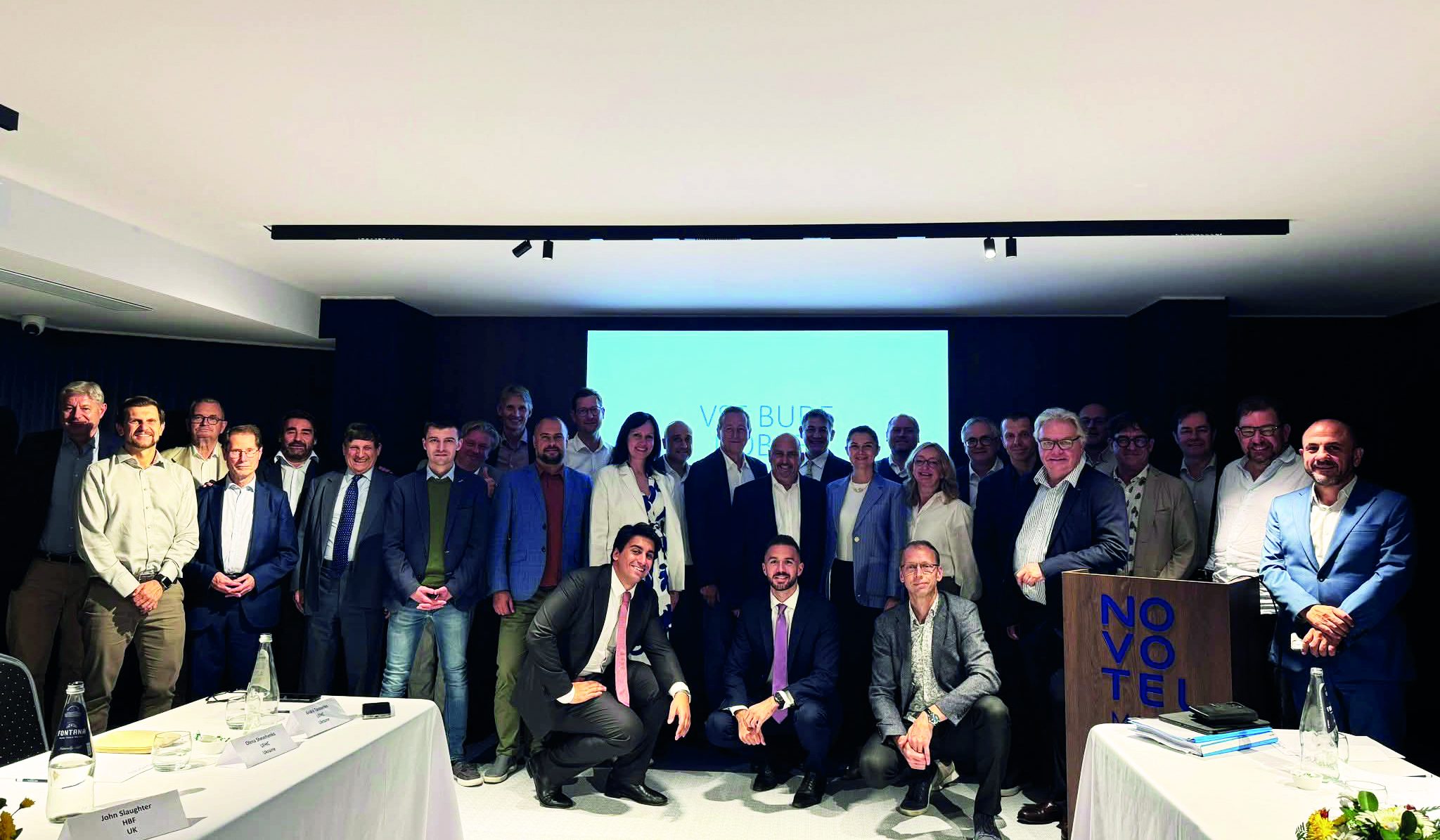
“In late 2025, Malta hosted the Build Europe Congress, with delegations from twenty countries attending. The MDA played a central role in organising the event”
The National Building Council, set up jointly with the Kamra tal-Periti, is one example. Where previously the two organisations might have issued separate statements, they now have a forum for agreeing a common position. For members, this means fewer public disagreements that could undermine confidence in the sector.
WHAT MEMBERSHIP DELIVERS
Chetcuti is clear about what the MDA exists to do. “We are a service organisation,” he says. “If members don’t feel they are getting value, we are not doing our job.” Under his tenure, that value has taken concrete form.
MARKET INTELLIGENCE
The MDA now gives members access to data they cannot get elsewhere. The association tracks promise of sale agreements continuously, providing a real-time picture of market conditions. More significantly, the MDA is developing a property price index through the Property Malta Foundation. “We never saw this before in Malta regarding the sector’s prices,” Chetcuti noted in October 2025. When completed, this index will give members reliable, authoritative data for their business planning and strengthen the industry’s position when negotiating with government and financial institutions.
FINANCIAL BENEFITS
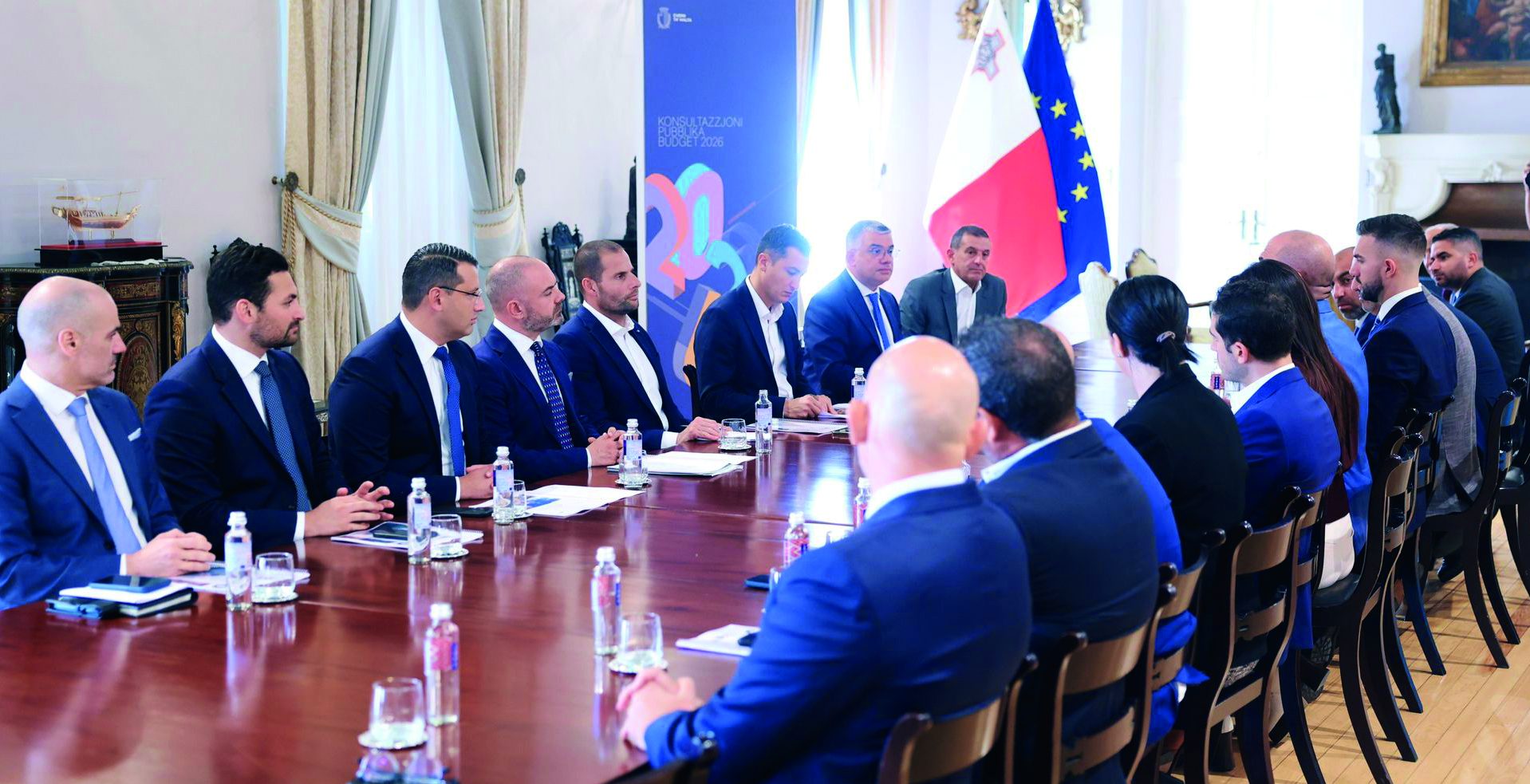
When the national budget was announced in October 2025, Chetcuti publicly engaged with the specific measures that put money in members’ pockets. The machinery modernisation and digitalisation schemes secured in that budget are direct financial incentives that reduce members’ operating costs. At the same time, Chetcuti expressed the association’s “disappointment for the decrease in capital expenditure.”
PROTECTION AGAINST BAD POLICY
When proposed planning reforms threatened to allow delays to be exploited by third parties, the MDA pushed back. When a court judgment in February 2026 created legal uncertainty, the MDA immediately called for legislative reform. “Legal uncertainty is bad for business,” Chetcuti says. “Our members need to know where they stand before committing significant values of capital.”
“Our members need to know where they stand before committing significant values of capital”
The MDA also continues to pressure the government on bureaucratic reform. In May 2024, Chetcuti made clear that the association was “not satisfied with the lack of reforms addressing the excessive bureaucracy” and was “actively engaging with the concerned authorities.” Every hour of delay the MDA manages to eliminate from approval processes is time and money saved for members.
ACCESS AND INFLUENCE
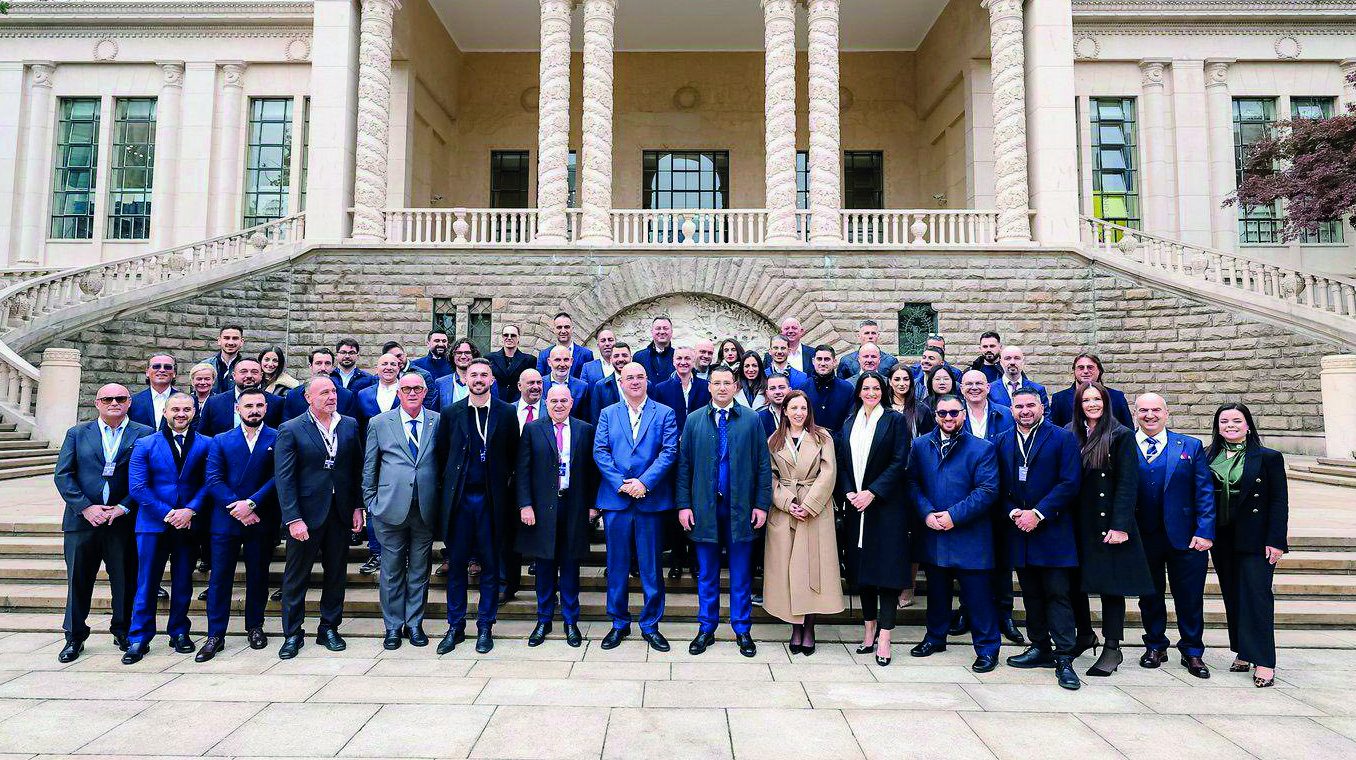
When twenty international delegations came to Malta for the Build Europe Congress, MDA members had the opportunity to meet them and explore partnerships. When Chetcuti and Stivala joined the trade mission to Shanghai, they carried the interests of Maltese developers with them. “Our members are interested in international markets,” Chetcuti explains. “Being part of that mission gives them access and credibility they wouldn’t have on their own.”
MALTA ON THE INTERNATIONAL STAGE
Hosting the Build Europe Congress with delegations from twenty countries brought tangible benefits for members. “It showed that we are taken seriously,” Chetcuti says. “People came here, saw what we are doing, and engaged with our members. That creates opportunities – partnerships, investment, new ways of working.”
The Shanghai trade mission carried a similar message: Maltese developers are looking outward, and foreign investors should consider Malta. “Our members are interested in international markets,” he explains. “Being part of that mission gives them access they wouldn’t have on their own.”
POLICY, GOVERNMENT, AND PUBLIC INTEREST
The MDA engages with government always with the aim of securing a better operating environment for members. Sometimes that means supporting what is proposed. When the government announced plans to turn the White Rocks site into a National Park, the association welcomed the decision. “When projects are handled properly, it builds trust in the industry. That trust translates into smoother processes for our members.”
“I don’t vote. That’s not my position. My job is to advise and then to implement the Board’s decisions”
Sometimes it means pushing for more. The MDA has supported schemes to restore vacant buildings while arguing for a wider retrofitting policy. For members, this represents new areas of work. “Our members want to diversify,” Chetcuti explains. “Schemes that encourage retrofitting open up new business opportunities.”
The association has also put forward budget proposals, including a change to the tax treatment of rental income below a certain threshold. The aim is to make lower rents more attractive to landlords – many of whom are MDA members. “It helps our members who rent out property, and it helps with affordability.”
A BROADER VIEW OF DEVELOPMENT
In January 2026, the MDA noted publicly that Eurostat figures showed Malta had tripled its share of renewable energy over the previous decade.
For a developers’ association, this might seem an unusual statistic to highlight. But Chetcuti says it reflects what members are telling him. “Buildings last a long time. The energy they use over that lifetime matters to the people who live in them. If we ignore that, we are not serving our members properly, because their customers are asking questions about energy efficiency.”
A NEW BASE OF OPERATIONS
The move to Avenue 77 in Mrieħel was driven by practical considerations. The MDA needed more space and wanted a place where members could interact. “We anticipate that our work will continue to grow,” Chetcuti says. “We wanted a place where we can welcome members properly, where we can hold events. Some of our seminars have been online. We want more of them to be in person.”
The MDA has long advocated for a comprehensive approach to retrofitting and regeneration. Such an approach improves energy efficiency, cuts long-term costs, extends the useful life of buildings, and reduces environmental impact – whilst simultaneously creating work for local trades, and supporting sustainability goals.
THE NEXT TWO YEARS
Chetcuti does not claim that everything is sorted. The communication effort still needs work. There are still members who miss messages. There are still policy areas where the MDA could be more effective. “There’s a lot still to do,” he says. “We keep working at it.”
The MDA’s foundations – the council’s authority, the mission, the commitment to representing the industry remain where they have always been. But two years in, the association has a different feel. Chetcuti’s approach has been steady: better communication, more analysis, wider engagement. The new office, the international events, the policy work, the property price index, the budget incentives – these are the visible results of an association delivering tangible benefits to the people who pay its subscriptions.
Whether it adds up to something lasting will depend on the next two years. But for now, the direction is clear: an MDA that communicates, that analyses, that represents, and that gives its members reasons to stay involved.

Comment