a New Product developed for Future Smart living


The widespread use of renewable energy sources has brought about several changes in the way electricity is consumed. The possibility of generating energy on a domestic level has also opened the possibility of operating an isolated system, independent of the grid, using it merely as another possible source of electrical power rather than the main source on which the entire network depends.
Though renewable sources of energy have seen rapid advancements in efficiency and capability, renewable sources of energy alone are not yet capable of reliably supplying year-round energy which make it possible to detach from the grid. Using Solar power as an example, using a reasonably sized battery backup system makes it possible to iron out daily fluctuations in available solar power. However, the battery backup needed to flatten seasonal fluctuations would be unfeasible, from both an economic and an engineering standpoint.
From this shortcoming of renewable energy sources arises the need for the micro-CHP. A research team from ABERTAX Kemtronics and the University of Malta under the supervision of Professor Joseph Cilia created a novel smart micro-CHP. Most micro-CHPs available on the market are grid dependent, supplying the generated electricity directly to the grid. The CHP they developed is powered from LPG and has an integrated 3kWhr lithium battery that is used to store enough energy to take the morning excess of energy harvested from the solar panels which can later be then used for the evening energy demand.
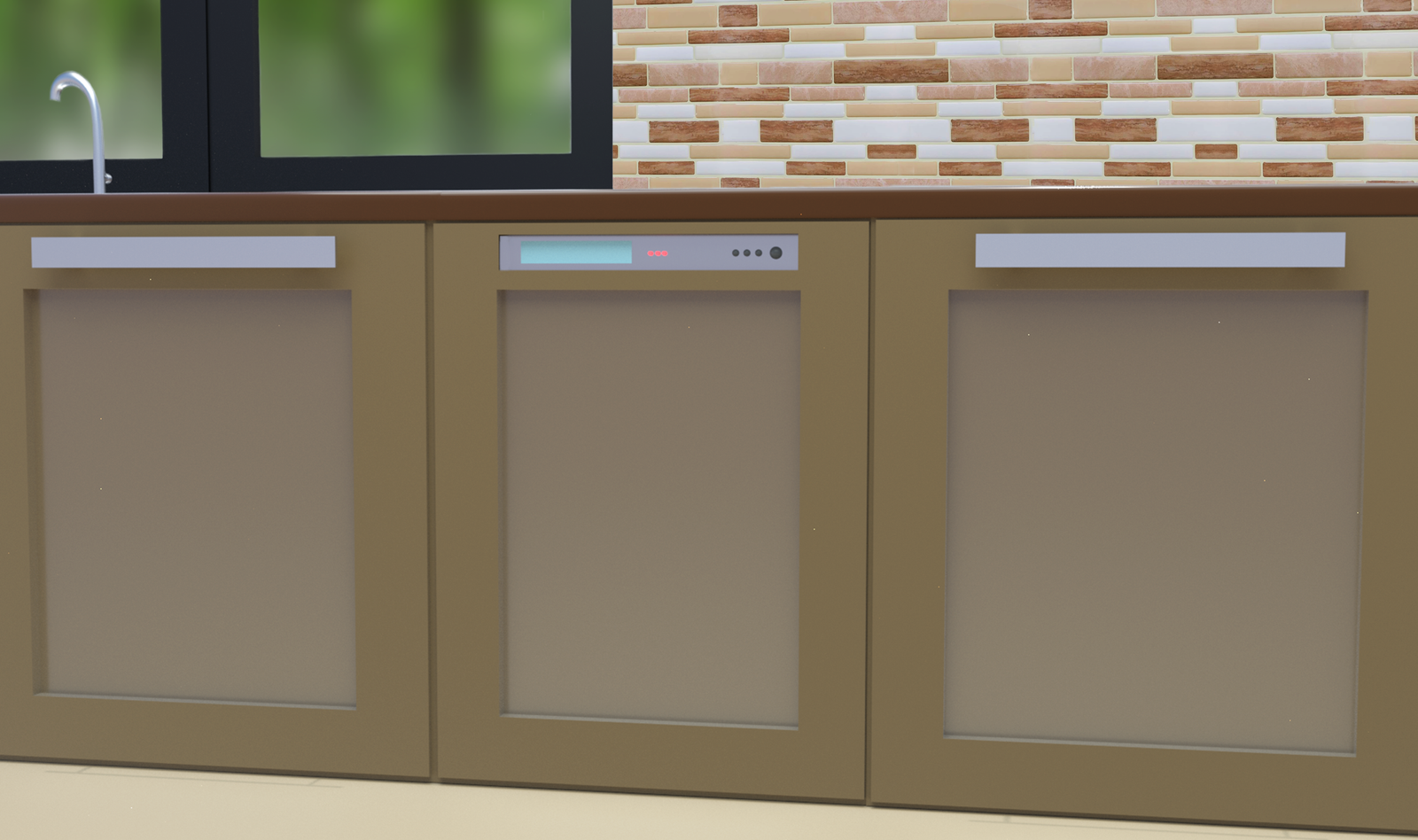
The size of the CHP is that of standard kitchen appliances and
can easily be fitted inside the standard kitchen unit. The heat
generated from both the engine and the exhaust is mostly recovered
making it possible to use plastic pipes even for the exhaust
outlet. The output continuous electrical power is 2.5kW
while the continuous heat output is 5.8kW. If the electrical
power is used to power a heat pump the total heating efficiency
of the combined system exceeds 150%.
The unit is ideal especially for penthouses, small terraced houses, restaurants and medium sized sea crafts. The user can communicate via Wi-Fi with the unit in order to control its operation and monitor its output.
The first five prototypes are currently being tested in Malta and Germany. One of the units is installed in a typical Maltese townhouse that has been equipped with floor heating. The unit will be certified in the coming months and should be available for sale in the first quarter of 2022.
The project ‘A Smart Micro Combined Heat and Power
System’ is financed by the Malta Council for Science and
Technology, for and on behalf of the Foundation for Science
and Technology through the Fusion R&I Technology and
Development Programme.
Head of Research Group:
| Professor Joseph Cilia | 99252393 |